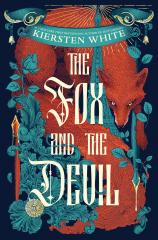
The Fox and the Devil
Review
The Fox and the Devil



Kiersten White has long found success with multiple genres and target audiences. Her latest release, THE FOX AND THE DEVIL, takes inspiration from DRACULA and infuses it with new characters who continue to drive the dark vampire mythos.
A brief prologue features a young man named Henri visiting the Paris Exposition Universelle in 1900. His experience there ends with him meeting a mysterious stranger who seemingly consumes him. Following this introduction, we step back a handful of years to 1895 where a bizarre murder investigation is taking place in Amsterdam. Leading it is Anneke, a forensic investigator and daughter of the late Dr. Abraham Van Helsing.
"[THE FOX AND THE DEVIL] takes inspiration from DRACULA and infuses it with new characters who continue to drive the dark vampire mythos.... The last act...is full of revelations and is far from your typical vampire tale."
Anneke describes to her two colleagues how the victim they are studying was apparently posed in a specific way and seems to have been photographed postmortem by someone. When she has the opportunity to see other photos taken of the crowd that gathered around the place where the murder occurred, she notices a shadowy figure that is all too familiar to her.
After Anneke meets with her friend and fellow investigator in Budapest, where he has been working on an eerily similar murder scene, they recognize that they are dealing with a serial killer. For Anneke, this is not just any serial killer but a woman she knows as Diavola --- an undead creature who not only killed her father but has been taunting her with notes and random appearances ever since. Her mother insists that Abraham had gone mad with his vampire monster-hunting obsession and took his own life. Anneke knows better and will not stop until the woman who calls her “Little Fox” is stopped and eradicated.
In one note, Diavola reminds Anneke that she sees herself as the hunter when she has always been the prey. We get to see a collection of correspondence between them over a period of years, each from a different location in Europe. In a note left in Rome, Diavola states that the dead are beyond saving and questions whether or not vengeance is still possible. The novel is occasionally infused with historical figures and events, such as Louis Lumière, whose groundbreaking work in the development of photography and cinema are well known.
It is not until almost halfway through the book that the word vampire is used, in this case by an investigator in München, where yet another gruesome killing has occurred. The murder here is a bit different as a recently deceased father allegedly returned days later to attack and claim his own family. This unnatural behavior is attributed to an act of vampirism, which Abraham fought against. Anneke witnesses this very same vampire, who is also responsible for killing her friend with whom she was collaborating on the investigation.
A meeting with Diavola where she tells the harrowing origin story that turned her into the undead creature she has become is not only a highlight of this chilling novel but also calls into question the very nature of the relationship between her and Anneke. The last act of THE FOX AND THE DEVIL is full of revelations and is far from your typical vampire tale.
Reviewed by Ray Palen on March 13, 2026


The Fox and the Devil
- Publication Date: March 10, 2026
- Genres: Fantasy, Fiction, Gothic, Historical Fantasy, Historical Fiction, Historical Romance, Romance
- Hardcover: 368 pages
- Publisher: Del Rey
- ISBN-10: 0593724437
- ISBN-13: 9780593724439