Excerpt
Excerpt
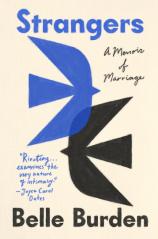
Strangers: A Memoir of Marriage



Each spring, an osprey couple returns to the same nest on our property on Martha’s Vineyard. The nest is on the edge of a lake that leads into Vineyard Sound, facing west. In lucky years, eggs appear in the nest in May, chicks in June. In July, the juvenile ospreys learn to fly. By September, the family is gone, headed to the Caribbean or South America for the winter.
When we bought our house in 2005, my husband, James, became obsessed with the osprey couple, with the magic of their annual return to the same location. He was always anxious, waiting to see if they would appear, if they would produce eggs, if the eggs would survive raccoons and crows, our local predators. Every year, he celebrated when the juveniles flew for the first time.
He drew me and our three young children into the drama of the ospreys, pointing them out as they soared above us, leading us in yelling “Hi, Ossey!” and waving at the sky. He took us into the woods to see their nest wedged high in a tree. He befriended two local osprey experts, older men who invited us to watch them tag an osprey at dawn. They attached a device that would track the bird’s movements during the winter. The kids, still in their pajamas, were awestruck by the creature that looked so much larger on the ground than it did in the sky. The experts named the tagged osprey after me and sent us updates on Belle’s progress throughout the winter. We worried for her and toasted her return.
After raccoons ravaged the ospreys’ eggs two years in a row, the experts installed a pole in the same area as the original nest, designed to deter climbing animals. The tree stayed empty for a few years and then, to our astonishment, a small nest appeared. The nest grew steadily, becoming more majestic every summer, a landmark visible to swimmers and boaters across the lake. After a decade, it measured more than four feet wide and three feet tall, one of the biggest nests on the island.
When we arrived on the Vineyard in March of 2020, the nest was empty. The birds were still warming themselves in the southern hemisphere, perhaps beginning their pilgrimage back to the island, making their way over the Caribbean Sea and Florida, continuing north, hugging the coastline, as a virus, first found in China, made its own explosive journey through the United States. My husband and I walked around the pole in our wool hats and parkas, our boots sinking in the marsh. The nest was intact, unchanged from the previous fall. Even in the bitter air, even with sharp sticks poking out of every side, it looked strong and stable. Welcoming. We smiled at each other and talked about the couple’s return. Would we be here to see it?
After the pandemic shuttered New York City, where we lived most of the year, we decided to quarantine on Martha’s Vineyard with our two youngest children, then fifteen and twelve. It made sense to move to the Vineyard; our house there was isolated and it was our favorite place in the world. The hedge fund where James worked had gone remote, and my legal work could be done from anywhere.
We arrived on March 15. The island was still firmly in winter, with temperatures in the thirties, the trees barren and the light flat. An icy wind whipped around us as we unloaded the car, unpacking sweaters and boots, the girls’ textbooks and cellos, one larger than the other. James set up his home office on a card table in the living room, rising at 4 a.m. to worry over the markets. He cut three different kinds of wood and built gorgeous fires in the late afternoon. He made me whiskey sours as the sun set (we believed reports that whiskey would kill the virus) and locked every door of the house at night, even though the island’s population was sparse and, like New York, in lockdown. He seemed proud of his role as father and husband, nurturing us, protecting us.
I went for walks, tried to keep up with house cleaning and laundry, and watched the news throughout the day. There were images of overflowing emergency rooms, hospital tents in Central Park, refrigerated trucks filled with corpses. More than 20,000 people had died in New York City. There was no vaccine, and no timeline for one. Even in our isolation, even with our privilege, I was afraid.
I often sought out James in the woods. Out of our daughters’ earshot, we would talk about the latest pandemic news, whether we should wear masks or gloves to the grocery store, if we needed to isolate grocery bags and packages before we unpacked them. James would kiss the top of my head as I hugged him, gripping the back of his sweater.
Our younger daughter, Carrie, discovered Fortnite and played remote games with her friends in our guest bedroom, her small body dwarfed by a giant armchair. Our older daughter, Evie, wanted to learn to make fresh pasta. She started with gnocchi and served it for dinner on March 21, the first night of spring. James made a roast chicken to accompany Evie’s dish, using our outdoor grill as an oven, standing on our deck in the dark, adjusting the knobs, making sure the temperature stayed at four hundred degrees. It came out perfectly: moist and golden brown.
We ate at our rectangular wooden table in the kitchen. I wore pajamas with a thick wool sweater and socks, my hair still wet from the shower, piled into a bun on the top of my head. The wind howled as we ate. James seemed distracted and kept eating the gnocchi directly from the bowl rather than serving himself, a pet peeve of mine. He removed the oyster from the chicken, the piece he’d taught the kids to covet, and gave it to Carrie.
I FaceTimed our son, Finn, who was staying with his friend’s family on Long Island, joining a group of teenagers. At seventeen, we knew he would be happier with his friends, and we thought his time away from us would be limited, a couple of weeks at most. I held up my phone so we could all see his face. We told him we missed him.
After we finished eating, James left the kitchen to make a work call. The girls went to the living room to watch television. Alone, I soaked the pans, loaded the dishwasher, wiped down the table. As I was filling a bucket with water and white vinegar to mop the floor, my cell phone rang, glowing and vibrating on the kitchen island. I didn’t recognize the number, so I let it go to voicemail. When my phone pinged to register the message, I put down the bucket and pressed play. It was a man’s voice. He sounded young and nervous.
He said, “I’m trying to reach Belle.” He paused. “I’m sorry to tell you this, but your husband is having an affair with my wife.” He gave his name and number.
I froze, feeling dizzy. The words didn’t make sense. I gripped my phone and pressed the play arrow again, listening to the man’s soft voice for the second time. I thought, This can’t be true. This must be a mistake. James will explain this.
I leaned the mop against the island and went to find him, descending our stairs just as he ascended them. He was coming to find me. He looked anxious, worried.
He put his hand on the small of my back and guided me into the guest bedroom, the room set up with Fortnite, with empty packets of Cheddar Bunnies on the rug. He sat down on the couch. I sat in a chair to his right. There was a long pause, as if he was collecting his thoughts, searching for the right words to say to make this go away. I thought he would do that—he would make it go away. I waited.
He took both my hands, leaned forward, and looked me straight in the eye. He said, “I promise you, this meant nothing. It’s over. I love you and only you. I’m so sorry. I’m so embarrassed.”
I asked, “How long has it been going on?”
He answered, “Only a few weeks.”
I looked down at his hands, at my body, and felt ashamed of my matronly pajamas and my socks, an oil stain from dinner on the thin cotton of my pajama pants.
His platinum wedding band, on his ring finger, looked scuffed from years of wear. My fingers, underneath his, were bare. I had taken off my rings, including my diamond wedding band, the day before. A friend had told me that the virus could hide under rings, evading Purell and soap, so I had pulled them off, dropping them in a jar of jewelry cleaner. For a split second I thought, Did taking off my wedding ring cause this? Did I shake something loose in the universe?
“What is her name?” I asked.
“It doesn’t matter,” he said.
“I’m going to call her husband back, so you might as well tell me.”
He said the name. It was generic and, like my maiden name, alliterative; it sounded sweet.
“Where did you meet her?” I asked.
He said she was a banker. They’d met through work. He said, “We had this attraction.”
He pulled his hands from mine and held them up to demonstrate the force pulling them together, his hands cupped, fingers spread, like he was holding a basketball. “But, I swear, it didn’t mean anything.”
“Does she have children?” I asked.
He nodded and said, “She has two kids.”
Excerpted from STRANGERS by Belle Burden. Copyright © 2026 by Belle Burden. All rights reserved. No part of this excerpt may be reproduced or reprinted without permission in writing from the publisher.


Strangers: A Memoir of Marriage
- Genres: Memoir, Nonfiction
- hardcover: 256 pages
- Publisher: The Dial Press
- ISBN-10: 0593733312
- ISBN-13: 9780593733318