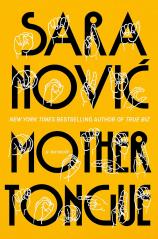
Mother Tongue: A Memoir
Review
Mother Tongue: A Memoir



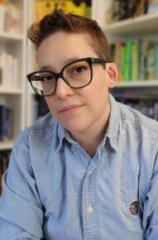
Sara Nović's award-winning novel, TRUE BIZ, is set at a school for the deaf. Nović herself is deaf. She's also the mother of two young sons --- one, her biological child, is hearing; the other, adopted from Thailand, is deaf. It's this experience of parenting her boys and raising them within deaf culture that bookends her memoir. MOTHER TONGUE is both deeply personal --- contrasting her own youthful immersion into deafness with her son's experience --- and wide-ranging in scope.
Nović was practically dragged into her deaf identity kicking and screaming. After an initial diagnosis of hearing loss during a routine schoolwide screening, she spent years denying the truth from herself and hiding it from others, getting better at masking her growing deafness through a variety of techniques. However, she did eventually learn American sign language and is now --- as she explains clearly and consistently throughout the narrative --- a champion of preserving ASL as the best means for deaf people to communicate with one another and with hearing advocates in an authentic, fully expressive way.
"Those who already are part of the deaf community or adjacent to it likely will find much to relate with in MOTHER TONGUE. Hearing readers who aren't intimately acquainted with deafness...will find it as illuminating as it is affecting."
I previously had seen references to some members of the deaf community criticizing the championing of technological “cures” for deafness, such as cochlear implants. But I didn't really understand the critique before reading Nović's book, which clearly spells out the limited capabilities of these devices and what the insistence on this kind of technology --- particularly for very young children who are deaf from birth or toddlerhood who don't have the ability to choose it --- means in terms of losing other access to language.
The links between language and the ability not only to communicate but also to think clearly and articulate those thoughts and feelings run throughout MOTHER TONGUE. Nović's joy is palpable as she witnesses her adopted son rapidly acquire language once he learns to sign. She also doesn't hold back in her criticism of family members of deaf children who fail to learn to sign at even a basic level, compelling their kids to conform to a hearing world rather than adapting themselves.
The memoir is even more expansive than this, as it explores the intersections of deafness with a variety of cultural and historic phenomena. They include the rates of police violence against deaf and disabled people, the enduring legacy of eugenic approaches to dealing with deafness (currently exacerbated in frightening ways by advancements in medical and reproductive technologies), and the rates at which deaf children eligible for adoption remain unplaced with families prepared to support and love them.
Those who already are part of the deaf community or adjacent to it likely will find much to relate with in MOTHER TONGUE. Hearing readers who aren't intimately acquainted with deafness (which, as Nović points out, is the vast majority of Americans) will find it as illuminating as it is affecting. At times, those less familiar with these issues may question why, for example, Nović takes exception with certain media portrayals of deafness, which are called out but not explained.
However, it's not Nović's job to connect the dots for the rest of us. It's our job, thanks to her enlightening narrative, to become aware and continue learning how we can better understand and appreciate the unique perspectives of deaf people.
Reviewed by Norah Piehl on May 8, 2026


Mother Tongue: A Memoir
- Publication Date: May 5, 2026
- Genres: Memoir, Nonfiction
- Hardcover: 272 pages
- Publisher: Random House
- ISBN-10: 0593241533
- ISBN-13: 9780593241530