Excerpt
Excerpt
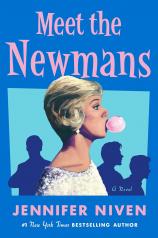
Meet the Newmans



The New York Times
MARCH 19, 1964
Dear CBS: I’ve Met the Newmans, Thanks, and They Have Overstayed Their Welcome
by Walter Kerr
For the past twenty years, the real-life Newmans—Del, Dinah, and sons Guy and Shep—have ruled the airwaves as “America’s Favorite Family,” first on CBS Radio, later on CBS Television. From the start, patriarch Del has been the creative motor behind the show, crafting it around his likable family and the wholesome, humorous situations they find themselves in—Del is locked out of the house in his pajamas! Dinah must give a party on an hour’s notice! Guy buys a new car and hides it from his dad! Shep has two dates for the same dance!
What worked in 1952, when the series debuted on TV, doesn’t work (at all) in 1964. The situations—unassuming and harmless—remain largely the same as they were twelve years ago. Del still invites us to laugh along with him at himself, while providing a gentle lesson on virtue and doing good by others. Dinah, devoted wife that she is, unfailingly supports this message and her husband. Meanwhile, the boys are polite and clean-cut and never give their parents any real worry.
But—as Bob Dylan sings—the times they are a-changin’, and in the aftermath of JFK’s assassination, the black-and-white universe of the Newman family comes off as square and outdated. They are a time capsule to a world that perhaps never truly existed except in the minds of entertainment executives.
Newmans has never been revolutionary. Nor has it changed the world for the better. I realize that it’s meant to be entertainment, that—one can argue—it’s merely an example of what ails us and not the actual problem. But in my opinion, it is the problem.
So, CBS, we have come to my plea.
Let Del play himself—the shrewd, hardworking dictator who’s sitting atop a hugely prosperous twenty-year business. Let Dinah lose her temper—surely she gets sick and tired of bailing her husband and sons out of trouble. Give Guy something to do other than get married, become a dad, follow in his father’s footsteps. Let him be funny or jealous of his younger brother’s runaway success or both. Unleash Shep.
Or admit that it’s time to retire Meet the Newmans. Send Del and Dinah off to join Fibber McGee and Molly, Jim and Margaret Anderson, Ward and June Cleaver and all others who came before and have since—wisely—faded to a warm memory of a simpler time. While you’re at it, put the long-suffering Guy out of his misery. Shep can still make records, go on tour, be on TV in another vehicle, as long as it reflects the times he’s living in. The kid is too young to be middle-aged.
Just please—keep the Newmans as we know them out of our homes. Let America’s weariest family disappear into obscurity where they belong.
ONE
MARCH 19, 1964
Twenty-four hours earlier
The telegram arrived as Del was leaving for the day. It was delivered by Larry, the security guard, who had taken possession of it from Sharon in reception. All his life, Del had made friends easily and with everyone. CBS Television City was no exception. He not only knew the names of the people who worked there, he knew their families. It was one of the many things everyone loved about him.
“Caught you just in time,” Larry said as he handed Del the envelope. “What’s for dinner tonight? Let me guess. Beef stroganoff? No, no—beef Wellington.”
The guard rubbed his hands together as if awaiting a much-anticipated gift. He had a happy marriage of his own. A nice house, a loving family. He didn’t envy Del those things. What he did envy was the legendary culinary skill of Dinah Newman, America’s preeminent housewife. He and his own wife divided the cooking duties equally, which meant they ate a lot of cold cuts and sandwiches.
“A surprise,” Del said and flashed the smile he’d been flashing since he was a kid, the one that was as natural to him as breathing. He didn’t mention that he ate steak almost every night, that their housekeeper, not Dinah, cooked it exactly as he liked it—medium rare with just a hint of salt and pepper.
Del certainly hadn’t married Dinah for her cooking. He’d fallen for her laugh, for the way she challenged him and spoke her mind and forced him to lighten up whenever he took himself too seriously—which, unfortunately, was often. He’d fallen for her ambition and get-up-and-go, her enormous dreams for the future, and her unshakable optimism.
Outside in the parking lot, he slid the telegram inside his jacket pocket, where it remained unopened during the ride home. It pressed against his chest, thrumming like it had a heartbeat of its own.
* * *
Later that night, after dinner, Del and Dinah went up to their bedroom, where she sat at her vanity and applied cold cream to her face and he removed his tie and jacket, careful that the telegram didn’t slip out and onto the floor. He hung the jacket in his closet—his clothes still lived in here even if he did not—and changed into the old burgundy sweater he’d had since college, back when he played football at the University of Southern California. He liked to say he had left a part of his heart on the field of the Los Angeles Coliseum.
“What should we expect in tomorrow’s meeting?” Dinah asked, leaning into the mirror. She was, as the magazines observed, still a looker. Long legs, blond hair she’d always worn short, pert nose, blue eyes that turned green or gray depending on what color she was wearing. Rosy cheeks and porcelain skin, more girl next door than vamp. She had freckles year-round that lately she had stopped hiding under a layer of powder because she thought they made her look younger. A real dish was how Del described her whenever he recounted the story of how they met and fell in love. Then and now.
He sat on the bed and removed his shoes. “I don’t know much except that Aubrey wants to see us.” James T. Aubrey being the president of CBS Television. “I assume he wants to discuss the new contract.” He instilled his voice with a confidence he didn’t feel.
When they’d signed the twelve-year contract with CBS, time had stretched before them limitlessly. A twelve-year contract was unheard of back then, a testament to Del’s shrewd negotiation skills, business savvy, and charm. Now, one month away from the end of their twelfth season, renewal was heavy on the minds of all four Newmans. Heavier on the mind of Del, who—unbeknownst to the other three—had not managed their money as well as he could have.
From the beginning, he had taken complete control of the show—producing, directing, editing, acting, writing, and handling their income. He knew he had been a headache for CBS and their sponsors. Taking five days to film each episode instead of three. Not allowing a studio audience to attend the taping. Paying an Oscar-winning cinematographer to shoot the episodes like a movie, using expensive 60 mm film because it looked brighter and sharper and held up better. The network had only relented because Meet the Newmans brought in thirty-five million viewers each week.
Recently, though, the ratings had fallen. Last week, out of the 108 TV shows in the prime-time schedule, they had finished forty-seventh. Forty. Seventh. Worse, they had been beaten by Flipper, Lassie, and My Favorite Martian. Del couldn’t believe it. A dolphin, a collie, and a man from outer space. This was what America wanted to see over the warmhearted adventures of a loving family played by an actual real-life family.
“How much should we worry?” Dinah asked.
She didn’t know about the money situation. The boys’ trusts were largely intact, but the primary accounts, the ones the four of them drew their living from, had somehow dwindled. They weren’t exactly empty, but the amount in each was just so much lower than he’d expected. He had discovered it three months ago. It was the thing—unbeknownst to his wife—that had inspired his midlife crisis.
Not that the Newmans lived a lavish lifestyle. They were too busy working to take expensive vacations. His car and Shep’s had both been gifts from automobile companies. And sure, he had purchased a left-driving Bentley S2 Continental because it was a limited edition—one of only forty-nine produced between 1960 and 1962. And he owned a 1931 Rolls-Royce Phantom I, as well as a 1964 Rolls-Royce Phantom V. There was a Porsche 550 racing car that only had about two thousand miles on it, a Ferrari 500 Superfast that he didn’t trust himself to drive, and a luxury 1961 Facel Vega Excellence imported from France before the company shuttered for good. This was what happened when you grew up without anything, walking everywhere, barely enough food on the table—you made up for it in big and small ways.
Which was why it wasn’t just cars. There were the other collections, if you could call them that—the colonial coins and the modernist art. Ephemera from Arctic and Antarctic expeditions circa 1900 because in his heart Del fancied himself an explorer. Leather-bound first editions, which were housed in a special glass case in one of their two dens. And unique musical instruments, such as an uilleann pipe, a glass harmonica—like the one invented by Ben Franklin in 1761—and a Theremin.
Then, of course, he had bailed out employees and, in some cases, their families on more than one occasion. That time one of the lighting grips had fallen from a ladder—not even at the studio but at home, installing a window—and hadn’t been able to work for five months. That time Wendy from craft services needed a new car because her boyfriend totaled hers. Hell, he’d even paid for college for a few of their children. Things he had done without a second thought because these people were as good as family.
Copyright © 2025 by Jennifer Niven


Meet the Newmans
- Genres: Fiction, Historical Fiction, Women's Fiction
- hardcover: 400 pages
- Publisher: Flatiron Books
- ISBN-10: 1250372445
- ISBN-13: 9781250372444