Excerpt
Excerpt
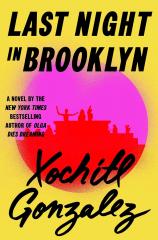
Last Night in Brooklyn



ONE
The messages began arriving early—as the regulars went streaming out into the breaking dawn—announcing that this day would mark a last in Brooklyn. The version we knew, anyway. “Come,” they all said, “to Freddy’s. Tonight. Come to say goodbye.” There was, they reasoned, nothing left for them to do. These homies had tried it all. Fought the good fight. Employed means ranging from sane and democratic to borderline domestic terrorism. They’d petitioned. They’d rallied. They’d deployed celebrities. Enlisted politicians. They’d chained themselves to brass bar rails for days at a time; strapped themselves to bulldozers. A few tried to gunk up the gears in a cement mixer; others had sent the developers threats. Some, it was said—the spiritual among them—had gone days without food or drink.
People, on the outside, thought it was a little daft. So much hubbub over a bar. But we, on the inside, knew it was so much more than that. Even those of us who barely went to Freddy’s in the first place. It was about who gets to decide something is valuable and something else worthless. It was as much about how the shots get called as it was about the shots themselves. (Everybody in Brooklyn—our kind of Brooklyn—believed in a fair fucking fight. But this, we all knew, had been dirty pool.) It was because one day it’s Freddy’s—some other guy’s watering hole—and the next day it could be yours. Or your house. Or your block. Or the neighborhood you’d always called home. Taken. Without one word of your say in the matter. Because suddenly, what you had—what you cherished and loved that had been shat on and forgotten by everybody? Well, suddenly, it has value. It is deemed nice. And apparently, it was decreed—by those unknown kings appointed to discern such things—that we didn’t deserve nice things.
So the crazies at Freddy’s had done everything they could. Everything we’d all been told we should do in the face of injustice. In the face of bullying and bullshit corruption. And when all that crap failed? When every idealistic, transparent channel failed? When everyone involved finally had to admit defeat? Well, they decided to say fuck you in the best way they knew how: by having one last all-night rager. And, man, did I respect that.
So, even though I didn’t party like I used to and the crew I once rolled with had moved on or been driven out of the neighborhood by the recession, I wanted to go. I hadn’t been inside that bar in three years. Not since the spring of ’07, when I wandered in tipsy with La Garza and stumbled out, hours later, even tipsier. But I felt the need to be there. Maybe, if I’m being honest—crazy as it sounds—I half expected to see her. Because I couldn’t imagine them knocking down a place like Freddy’s—an institution, really—and her not coming out to pay her respects.
* * *
When I was still tender aged enough to be malleable, my grandmother would pepper me with wisdoms from her island. “El mono sabe en qué palo trepa,” she would say. The monkey knows the tree it climbs. Now, I don’t know what happens in Puerto Rico, but in our corner of Brooklyn, trees mainly grew in novels, and the only monkey I ever saw was on a class trip to the zoo. But gossip—stories?—well, those were plentiful. And most often, my grandmother would mutter this idiom with a shrug and a sigh upon hearing a tale of a neighbor or a relative or even her own daughter suffering the consequence of some questionable decision or another. “El mono sabe en qué palo trepa,” she’d say, and go back to hanging clothes on the line or chopping an onion or any of the other seemingly endless grandmotherly tasks that occupied her time when she returned from her shift at work. So, it became obvious that this nugget had nothing to do with trees or monos, and everything to do with my grandmother’s passive assertion that if one found themselves ensnared in trouble, they probably knew what they were in for, one way or another.
I think we get shaped as much by the shit we hear that we agree with as we do by that which we don’t. And the truth is, once I left my grandma’s house for a real length of time, I started to find this worldview a little cruel. Or, more kindly, narrow. Monkeys might know trees, but what happens when you take them out of the forest completely? “Are you telling me King Kong should have known he’d get shot at by planes and guns he didn’t know existed when he climbed the Empire State Building?” I asked her once. It was during college and I was home for Christmas break. The movie was passively playing on our perpetually running TV. “Psst, King Kong!” she replied, sucking her teeth. “¿Cuándo mencioné yo el maldito King Kong?” Whatever. She missed my point—God rest her soul. My point was this: The monkeys’ instinct is to climb, right? Up and up and up. That’s their nature. But what happens when it isn’t a tree? What happens when they leave their environment and start ascending shit they’d never even known existed? How can you possibly hold them to blame for what happens when they reach the top?
Anyway, this morning, as the texts came in and I strolled the neighborhood with my bodega coffee, I looked up at the Clock Tower building, gleaming. White granite and limestone against clear blue sky. For now, still the tallest tower in Brooklyn. And I couldn’t help thinking of that saying. Couldn’t stop myself from picturing her up there: La Garza. Beating her chest and batting away almost anything that came at her. And remembering how at the time it all went down, everybody—including myself—thought she should have known better. As worldly and sophisticated as she presented herself? How could she not? Some, I think, maybe even felt she had it coming. But to me, it’s clear she’d gotten lost that summer in unfamiliar terrain. Climbing and climbing the way she always did, until suddenly, the air around her grew too thin to even breathe.
* * *
In some small way, La Garza was why I moved to Fort Greene. It was the fall of 2005 and I had just, the Christmas before, gotten engaged. James, my fiancé, was exactly who my mother and I had set out to find: a nice guy from a good family, albeit a little full of themselves. We’d been dating since college, and I’d lobbied hard for that ring in ways great and small before he proposed. Wedding magazines strategically peeking out of my overnight bags. Color printouts of ring photos that mysteriously made their way into James’s MCAT study guides.
James was a guy full of determination once someone he trusted told him what to be determined about. So naturally, after he finally popped the question, he wanted to do it as soon as possible. Certainly before he headed up to Syracuse to begin the MD/PHD program that would make him the second generation in what his father hoped would be a long line of doctors. Initially, I did all the things everyone expected me to do. I tried on wedding dresses, tasted cakes, hosted a big awkward dinner for our families to meet. (Well, his family and my mother: My father was “traveling,” or uninterested. I’ll probably never know.) Then, when we were touring our fourth or maybe fifth all-inclusive, five-dollars-extra-per-person-Viennese-hour catering hall on Long Island, I felt myself compress as if in too-tight Spanx. Unable to breathe, let alone imagine myself tossing a bouquet. This thing I’d wanted so badly was now happening too fast. I had just gotten the lowliest of jobs at an advertising agency—but it came with a chance to write copy. And if we got married? I’d basically have to move to Syracuse. And do what, exactly? Take some shitty university job? Hang out in the snow with the other partners of future internists and gynecologists? Fuck that. I told James it felt rushed, and James—never one for walking and chewing gum at the same time, bless his heart—said that was fine, but he couldn’t worry about a wedding and medical school. So we decided to stay together, long- distance. The whole thing postponed until after he matched. Sure, it was a long program. But we’d already been together for six years, what were another three or four in the scheme of the rest of our lives? And so we became one of those couples that everybody mocks for being infinitely engaged.
I didn’t care. It wasn’t that I didn’t want to get married. I just didn’t want to get married right then. When we met, James was a rebellious premed student whose real dream was to be a music producer. The next D-Dot or Swizz Beatz. I thought I was going to be the female Aaron Sorkin, writing movies and shows. Fast-forward a few years, and he was selling radio ads for Hot 97 while I was excited—genuinely thrilled—to get a freelance gig writing commercials for a used car lot in Bay Ridge. Then, I got this job—a real job! And he, after a yearslong campaign from his family to do “something real with his life” (i.e., be a doctor), suddenly was applying to medical school. Clearly, we were both still sorting out this adulting thing. James understood this. My mother, on the other hand, did not.
See, the thing about it all was this: I was from the gnarliest, shortest branch on an otherwise very fine and upstanding American family tree. My mother was longing for an occasion to prune this branch so that it might grow higher and sturdier than any of the better-tended boughs. She felt quite strongly that getting married (to the right kind of man) and giving my father his first grandchildren (boys) would help me to do this.
This wasn’t fully unfounded. My mother didn’t even know my father’s middle name—that’s how brief their love affair was—but somehow, she understood completely what made him tick. Lineage. Tradition. Bloodline. This shit meant something to him. He was from one of those Black Oak Bluffs families that headed up to Martha’s Vineyard every summer. August after August, piling into a house full of photos of his mother with her sorors and his father with his friends from the Boulé; my cousins and half siblings at their Jack and Jill presentation balls. There were, it’s probably good to be up front about this now, no photos of me in this house. My father had met my mother while he was an associate at a white-shoe law firm and my mother—fresh out of John Jay with her associate’s degree and a dime by yesterday and today’s standards—was a newly hired paralegal. They shared, from her endless accounts of this time to me over the years, a few magical months during which my mother glimpsed life on the other side of the Brooklyn Bridge. Then, one day, she told him she was pregnant (surprise!), and suddenly, my father, known in my home as el Fantasma, was transferred to the firm’s London office. A few months later, my mother, out on maternity leave, was fired. (What could you do? It was the ’70s.) And so, for the first ten years of my life, I lived as Alicia Canales until my father, now engaged to a woman of good breeding and conscience, came and sought me out at my grandmother’s place in Gravesend, where my mom and I lived.
Nothing says love like a willingness to file paperwork. At least to my mother, anyway. My father didn’t so much welcome me into his life as he did into his name—Forten. Amended the birth certificate and everything. Mainly, though, I stayed living my life like a Canales, except for two weeks out of the year when he would send me up to his parents’ house on the Vineyard. Two weeks where my hair would be straightened, my softball mitt traded in for a tennis racket, and my r’s would become hard and nicely pronounced. Each August, allowing me a small glimpse of what full Forten-tude might have been like.
I detested his scraps and resented those two weeks, despite how beautiful those beaches are. But my mother licked that shit up as though our family name had been Culo and finally someone had saved me from the tragic destiny of being Alicia Ass. She relished my new name for the way it mortared into present her past with a man of the stature she perceived my father as having. But what she really obsessed about were the potential possibilities that Alicia Forten’s life might hold that, in her perception, Alicia Canales’s did not. Specifically, my prospects for becoming a future Mrs. Somebody Else. To some extent, who could blame her? Babies abounded in the Canales family. Husbands, on the other hand, were white whales. So, when I met James at the Inkwell during one of these stints in Oak Bluffs, the location of our meet-cute was enough to affirm for my mother that he was “the one.” And why lie? I was nineteen, and I guess I thought so too. Never mind that he was just the guest of some dude whose parents rented a house for a summer vacation—a status of outsider even lower than my caste. To my mother, it didn’t matter, and to me—especially in the beginning—well, I just liked James. Steady, grounded James.
Our plan—because with James, there was always a plan—was that I’d live at my grandmother’s while he was away at school so we could save money for a down payment on a house of our own. But then one night, just a couple of months into this arrangement, my homegirl Lorraine from work invited me to kick it with her friends over in Fort Greene. Lorraine had started as a temp, but with her charm and aptitude for quelling white anxiety, was quickly elevated to project manager. Outside of the cleaning staff and our UPS guy, she was one of the few nonwhite faces I saw at that advertising agency. But beyond that thin bond, she was the kind of cool girl that made you feel cooler because she wanted to hang out with you. She’d gone to Howard and been an R & B singer before her label dropped her after 9/11 and since then had been trying to make a go of it as an actress. She was pretty and fashionable without trying too hard. And never, ever did the “dumb damsel in distress act”—which at that time a lot of girls used to do. Lorraine’s roommate was another actress who’d booked a Disney cruise, and she wanted me to sublet while the girl was off at sea. The invitation was part of her seduction act.
Now, the idea of blowing money on rent was wildly impractical. But, in just the few weeks James had been gone, my life had rapidly devolved into various forms of killing time. Long commutes to and from Manhattan broken up by drinks with my coupled acquaintances from college that only made me feel more alone. The occasional nights out with my high school friends made time appear to move backward instead of forward. Lorraine was glamorous. At least to me. She had headshots and an agent and stories of nights out and VIP sections and guest lists and other things that my life as an engaged lady-in-waiting lacked. So, this one Friday night, after going home for a disco nap, I hopped on the N to Atlantic Avenue and walked down St. Felix to this little bar called Lucien Blue. “On Fridays,” Lorraine had told me, “we keep it local.”
I could hear “Gold Digger” blasting from the sleek sliver of a bar before I even got through the door, the place a tangle of beautiful bodies in various states of dress and movement. Women’s bare shoulders being gently grazed by the shirt-cuffed arms of men who’d never made it home from work to change. Waists clasped by hands as couples rocked to the beat. The moody bar lights reflecting the shimmers of glossed lips and watch dials and gilded hoops. It was hard to tell if it was a happy hour gone into overdrive or the beginning of a wildly promising night: everyone moving and singing along in one exuberant, huddled mass. I hadn’t had a drink yet, but I was intoxicated from the rapture pulsing inside this hole-in-the-wall. Because it was Friday and everyone was young and beautiful. And everything was potential.
It was in one of these dancing clusters that I found Lorraine, who introduced me to the people who would become the locus of my world, but whose names in that moment I could barely hear above the music. Marcus—smooth-faced and handsome—hiding the inner curmudgeon I’d come to love and know. Leti, who was riding high off her promotion to photo editor at The Source. And Aaron Francis, straight from his grind at a big law firm, looking fine in his first-class suit. Someone—probably Aaron; he was generous that way—put a drink in my hand. I had just polished it off and someone else was handing me another when we sensed a commotion of sorts toward the back of the bar. Not a fight—not that fights didn’t happen from time to time—but that night, it was merely the clamoring of ridiculousness. Mischief. A striking man—Omar, dressed to the nines as he always was, his shaved head looking like he’d polished it—stood up on one of the banquettes in the back and gestured for the DJ to cut the music.
“For all those who care, and that’s a lot of you,” he’d said, “this Young Tender here has challenged Madame La Garza’s title as Shopping Cart Queen. The match will take place in five minutes outside.”
I don’t remember who the lela was that challenged her—history is for the victors. But everyone who knew what was up began cackling and making bets and closing out tabs before streaming out to Lafayette Avenue, which, by that time of night, was not for anyone but dumb fools like us to take over, anyway. A small crowd formed along the curb, and Omar stepped out to the middle of the avenue. Two massive dudes with the look of gone-soft former college athletes were each wheeling a shopping cart, presumably stolen and abandoned from the nearby Pathmark, out of the little park across the street. The challenged and her challenger emerged from the small crowd—each clad in heels so high they made my own feet hurt just looking at them—and proceeded to stand precariously inside the woven-spindled shopping carts. Young Tender was cute and forgettable, but the other woman was something else altogether. Where Young Tender wobbled, this girl stood assuredly as far in front of the cart as she could, raising her face to be illuminated by the streetlights so we could all get a good look at her. And it was then that I recognized her: from Paper magazine and New York magazine and Nylon magazine. All the places where she had been named a “rising designer” to watch.
“I know who that is,” I muttered to no one in particular.
It was not so much that I recognized her face as much as I did her clothes. La Garza was, of course, wearing La Garza: a two-piece hot-pink outfit with the biggest unironic calypso sleeve anyone had ever seen. Tier upon tier of oversize ruffles, each layer seeming to eat the next. Anyone else—except for one of her models or celebrity clients—would have looked like a Muppet, but on her it was second skin.
“She lives across the street from me,” Lorraine said. “Batshit, but throws the best parties.”
I’d heard about the parties too: in Page Six and The Village Voice. The hot Puerto Rican guy from The Wire had made mention of it in a Vanity Fair interview. The reporter lumped it into all the new and edgy stuff happening in the mysterious land of Brooklyn, but I’d suspected this was not that. Not white indie rock Williamsburg or my classmates from Yale being “edgy” by paying above-market rent to their Polish landlords in Greenpoint. La Garza wore too much gold jewelry in her photo shoots. Her nails were too long and too done. She had a perpetual glint in her eye that said, “Oh yeah? Try me.” The kind of attitude you couldn’t “adopt” just because you signed a lease. The kind that I recognized came with being from here.
I was too embarrassed to ask Lorraine what was about to happen—too afraid to call attention to the fact that this was their place, their crowd, their world and not mine … not yet. I figured I’d find out soon enough. The two large cats wheeled the women in the carts to the far corner opposite us, behind the traffic light, which was yellow. When it switched red, the crowd started to lose it—lamentations of Dios! and These fools and sucked breath and women looking away and some of the dudes too. The big fellas revved the carts up like engines: back and forth, forth and back.
“Whoever goes the farthest when they let go of the carts wins,” Marcus bent down and whispered to me. “And whoever bites it…”
Omar put both his hands up like Cha-Cha DiGregorio in Grease, and when the light turned green, sliced them through the air. The big dudes shot them across South Elliott Place, downhill on Lafayette Ave. As soon as her cart was let loose, you could see the fear grip Young Tender’s face, her knees buckling immediately. But La Garza barely wobbled as she thrust her arms out to the sides, expanding as wide as she could. Her rumba sleeves fluttering in the breeze of her own momentum. “Are you not entertained?!” she bellowed before letting loose a cackle. Gaining more and more speed as she wheeled past. The other woman barely made it across the street before she toppled—fell into the cart, which flipped and pinned her down to the asphalt. Her friends ran to her aid, but the rest of our eyes were on La Garza, still rumbling for another full block until her cart finally slammed into a Jeep parked in front of the Crunch gym. She tumbled out onto the hood, and we held our collective breath for a second until she jumped up, hopped back down to the ground, and raised her arms in victory, inspiring hoots and hollers.
“Who wants to wheel a bitch home?” she yelled as she ran back toward the crowd, pushing her cart and basking in her glory. Omar hopped inside, and La Garza and the people I’d come to think of as her little crew headed off toward her house, shout-rapping the lyrics to “Victory” as their voices drew farther and farther away. I don’t know where everyone else who was outside went, but I suspect it wasn’t home. Lorraine led Leti and Marcus and Aaron Francis and me across the street to Frank’s. An old-man band was playing Spinners covers on the tiny stage, everybody seniors except the bass player, who was hot and young and winked at me when we walked in, causing my new friends to giggle.
“You’re fresh blood,” Aaron Francis joked.
“He needs a warning label,” Leti added, by way of explanation.
“A walking STD,” Lorraine added.
They greeted the bartender by name as we ordered more drinks, and just as we were sorting out the tab, Chuck—Lorraine’s fine-ass entertainment attorney—walked up to the bar and threw down some cash. He was there—scandalously, I’d come to find out—with a woman who was not his girlfriend and invited us to join them at their table. Chuck, whom I’d met once or twice, was introducing everyone to this woman we’d never see again.
“This is Alicia, Lorraine’s friend from work,” he said.
“Alicia is a great copywriter and is gonna be a director one day,” Lorraine corrected.
I smiled, slightly embarrassed that she seemed more confident about this than I felt myself. But soon, everyone was asking me what kind of stuff I wanted to work on and mentioning people they knew in the business that they should (and would) connect me to. And for a while, we just shot the shit about our grinds and ambitions. I remember distinctly that it didn’t feel the way it did with my friends from growing up: full of love but self-conscious that I sounded full of myself for wanting a bigger life. But it was also different from being around my acquaintances from Yale, where their lofty opportunities—like publishing books or making films—seemed to materialize effortlessly through connections that made my own aspirations feel further out of reach. Around that table at Frank’s, visions abounded, but nobody deluded themselves about the work ahead. And everybody seemed to realize that the connections we had in this world were going to be through one another. Who could help Leti launch her own magazine one day? Or how should Marcus play it to land an on-set role at MTV’s new show? And when and if Chuck might be able to bring Aaron Francis over to his own law firm. We were toasting Lorraine having booked a commercial when suddenly, something seemed to dawn on her. She, certainly a little drunk, put her wineglass down and pointed to Chuck’s lady friend.
“Wait a minute,” she said, “you know all our business. What on earth do you do? How do you make a living?”
The woman—who was, admittedly, quite pretty—had been largely an animated mannequin for most of our time at the table. Smiling, nodding, but making little noise.
“Calm down, shorty,” Chuck said, as if having anticipated where this conversation could go if given the opportunity. “_______ [because, like I said, we never saw her again] works in the neighborhood. We met at Brooklyn Moon.”
His evasiveness only made us more determined.
“She didn’t ask where you all met; she just asked what you do for a living,” Aaron Francis said, turning to her. “Seems like a simple question.”
The woman slurped up her drink. All of it. Like a kid with a Coke.
“I work for the stadium,” she said quietly. “Community relations.”
Lorraine and Leti just started to laugh. Chuck pulled out his BlackBerry and pretended to check his messages. A scowl grew over Marcus’s face that was hard to miss. But Aaron Francis—really, a guy born to be a lawyer—pulled up his shirtsleeves and licked his lips. Excited.
“There’s a lot of stadiums,” he said. “Yankee Stadium? Shea?”
The woman looked confused. Chuck set his BlackBerry down, rolled his eyes, and loosened his necktie.
“No,” the girl answered. “The new one. For the Nets? Down the street. I’m a liaison to help integrate the stadium into the community.”
“Welp,” Leti said mischievously, “nobody knows the community like Chuck. But I wonder if you’ve gotten a chance to speak with our friend Marcus here?”
The waitress brought over a fresh round of drinks. Thinking the worst was over, the woman took hers gleefully. Nearly giggled as she offered her hand out to Marcus.
“It’s a pleasure to meet you, Marcus. I’m happy to answer any and all questions about how this stadium is going to benefit Fort Greene, Prospect Heights, and the Park Slope areas. Lay it on me!”
“Where are you from?” Marcus asked pointedly.
Chuck pulled out his wallet now and started throwing more money on the table.
“Let’s keep it moving, what do y’all say?”
I, stupidly, stood up. Lorraine grabbed my hand and pulled me back down. The table was riveted.
“I’m from Montclair,” the woman said.
“So,” Marcus said, “what you are saying is, you actually know nothing about our lives in Fort Greene, Prospect Heights, or Park Slope.”
“Well, I live in Clinton Hill now.”
“Since you got this job,” Lorraine offered. And the girl nodded.
“Because it’s convenient for work?” Leti added.
“But also,” she added brightly, “it’s a vibrant, thriving community. I studied it at NYU when I was doing my master’s in urban planning.”
“So, maybe then,” Marcus said, voice full of grit, “you can tell me what they taught you at NYU about eminent domain? Because what do I know? I majored in modern culture and media, and work in TV, but the last I heard, we live in a damn democracy where backroom deals shouldn’t lead to people—people like me!—getting kicked out of our rent-stabilized apartments because my building happens to be where the concessions stand is going in your imaginary arena.”
“Marcus’s landlord just sold their building,” Chuck offered to the girl, by way of explanation.
“He has three months to find something new,” Lorraine added.
“Including a new roommate,” Marcus added, his head thrown back in exasperation. “I detest moving. I’m starting everything over.”
“Well, we’re sorry for the inconvenience,” the girl replied, almost lobotomized to his passion. “But it isn’t imaginary. The stadium is a reality that will create generations of opportunity and world-class entertainment for Brooklynites.”
“Which Brooklynites?” I asked, surprising myself. I didn’t, to be honest, have a very firm opinion about the thing they were putting up. But I also never liked smoke up my ass.
“All of Brooklyn,” the girl replied.
“I’m from Gravesend. What opportunity is it creating there?”
Marcus, sensing an ally, sat up straighter.
“Exactly,” he said. “What?”
“We are going to create jobs that are open to all—”
“I get that you moved here—to my home—and love it here,” I said. “I mean, what’s not to love? But with all due respect, I don’t know that you—or anyone involved in this whole thing—really understands this place enough to know what it will or won’t do. So, maybe just don’t sound so sure?”
There was a moment of silence while Chuck’s nameless friend pondered this. She put her purse on the table and fluttered her lips.
“Listen. Do you all wanna get hooked up with discounted season tickets when this shit opens or not?” she finally said. “Because I’m authorized to give out these presale vouchers, OK?”
“I mean,” Marcus said, “it’s the least you all could do for leaving me homeless.”
We all laughed at our own hypocrisy while we grabbed on to those vouchers, all the while doubting this thing would really come to be. Because it had already been two years with barely shit happening—except the people in Marcus’s building losing their place—and there was little reason to think something would happen now. Then we bullshat while we finished our drinks and headed over to Old Man Cellar’s bar on DeKalb, where we met White Julian and Sandra the Realtor. Eventually, we all wandered over to Alibi and, sometime before dawn, finally called it a night. Lorraine and I stumbled over to her apartment, where I crashed on the sofa.
And in the morning, when the smell of coffee and the sound of her soon-to-be-gone roommate doing vocal warm-ups woke me, I took one look around the place and realized that I was home. I moved in the following week. I told my mother and James that the commute from South Brooklyn was killing me—and it sucked. But the real thing killing me was this feeling that everything had already been decided. That all that my mother wanted for my life might actually make me feel buried alive.
Copyright © 2026 by Xochitl Gonzalez


Last Night in Brooklyn
- Genres: Fiction, Women's Fiction
- hardcover: 256 pages
- Publisher: Flatiron Books
- ISBN-10: 1250372038
- ISBN-13: 9781250372031