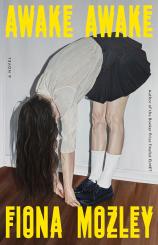
Awake Awake
Review
Awake Awake



Perhaps all novelists are interested in the topic of memory. So many novels, especially those written in the first person, are constructed as a narrator recalls the events of their life. But Mary Mooney, the narrator of Fiona Mozley's AWAKE AWAKE, is particularly invested in this subject. Mary is a novelist, but she also has come to distrust her own memories of certain incidents in her life. So she sets out to relate other, truer things as a way of exploring what memory is and how it functions.
Mary's first recollections take place during a 12th birthday party in 1999 on a farm outside York, England, where she lives. She and her two best friends, Amelia and Eve, witness the first of several traumas that will come to define their young life. This one, fortunately, is fairly minor, but in some ways it presages the much larger events that follow.
"AWAKE AWAKE is an unusual novel. As the narrative coalesces around that one defining tragedy near the end, it will lodge itself in readers' memories as well."
Mary's whole life is not tragic, of course. In various sections, she relates the intriguing arrival of an American boy, Eric, whose move to Yorkshire both completes and disrupts their small friend group. She traces her father's evolution of religious faith, a particularly consequential process given that he's a canon at York Minster, one of the most famous cathedrals in England. She tells of her younger brother, a brilliant musician and composer, who experiences several psychotic breaks. And she describes the inevitable teenage concerns of academic ambition and achievement, first crushes and first loves.
But as Mary and her friends grow up, the events of the world around them start to creep into their own. Eve and Eric find themselves on opposite sides in a debate over the second Iraq War. Subsequent protest movements result in political awakenings --- and the first hints of a tragedy that will only come to fully hit home near the close of the novel. And, in tandem with these recollections, Mary reveals that she's worried about her own memory --- specifically that she, like her brother, has experienced hallucinations and false memories linking her family history to massive world events.
What is real, and what is fabricated? In the end, no one really knows, and that can make the novel --- and the reader --- feel more than a little off-kilter. At times, these two parts of the narrative --- the likely hallucinations and the more realistic personal history --- can feel disconnected. But the book, structured in just nine long chapters, also reads like a series of well-developed short stories that deal with a particular moment in history. A few of these chapters open with almost a mini-meditation on the nature of memory, each of which bears reading (and re-reading) in its own right and helps ground Mary's youthful rememberings in these larger truths.
“All is recollection save for the slender membrane of now,” opens one chapter. “Every present thought, every present feeling, collides with a league of their familial ghosts. And if our lives in this moment seem flimsy, that is because they are. We dwell on that slim edge of experience while the waters of all that has been foam and swell.” York, as Mary describes it, is a city always on the verge of flooding. Mary, too, can feel overcome at times by her own memories, whether real or conjured.
AWAKE AWAKE is an unusual novel. As the narrative coalesces around that one defining tragedy near the end, it will lodge itself in readers' memories as well.
Reviewed by Norah Piehl on August 21, 2026


Awake Awake
- Publication Date: August 4, 2026
- Genres: Fiction
- Hardcover: 320 pages
- Publisher: Algonquin Books
- ISBN-10: 1523537140
- ISBN-13: 9781523537143