
A New York (Baseball) State of Mind
Baseball Books
A New York (Baseball) State of Mind

In THE BASEBALL UNCLYCLOPEDIA: A Highly Opinionated, Myth-Busting Guide to the Great American Game, Michael Kun and Howard Bloom note that the state of baseball literature consists primarily of books about the Yankees.
Nothing has changed much in the 20 years since their book was published. (The Mets are pretty high up there as well, but given that the Bronx Bombers have been around 50+ years longer, their literary superiority is not surprising.)
This year’s crop includes the almost-requisite homage to New York baseball.
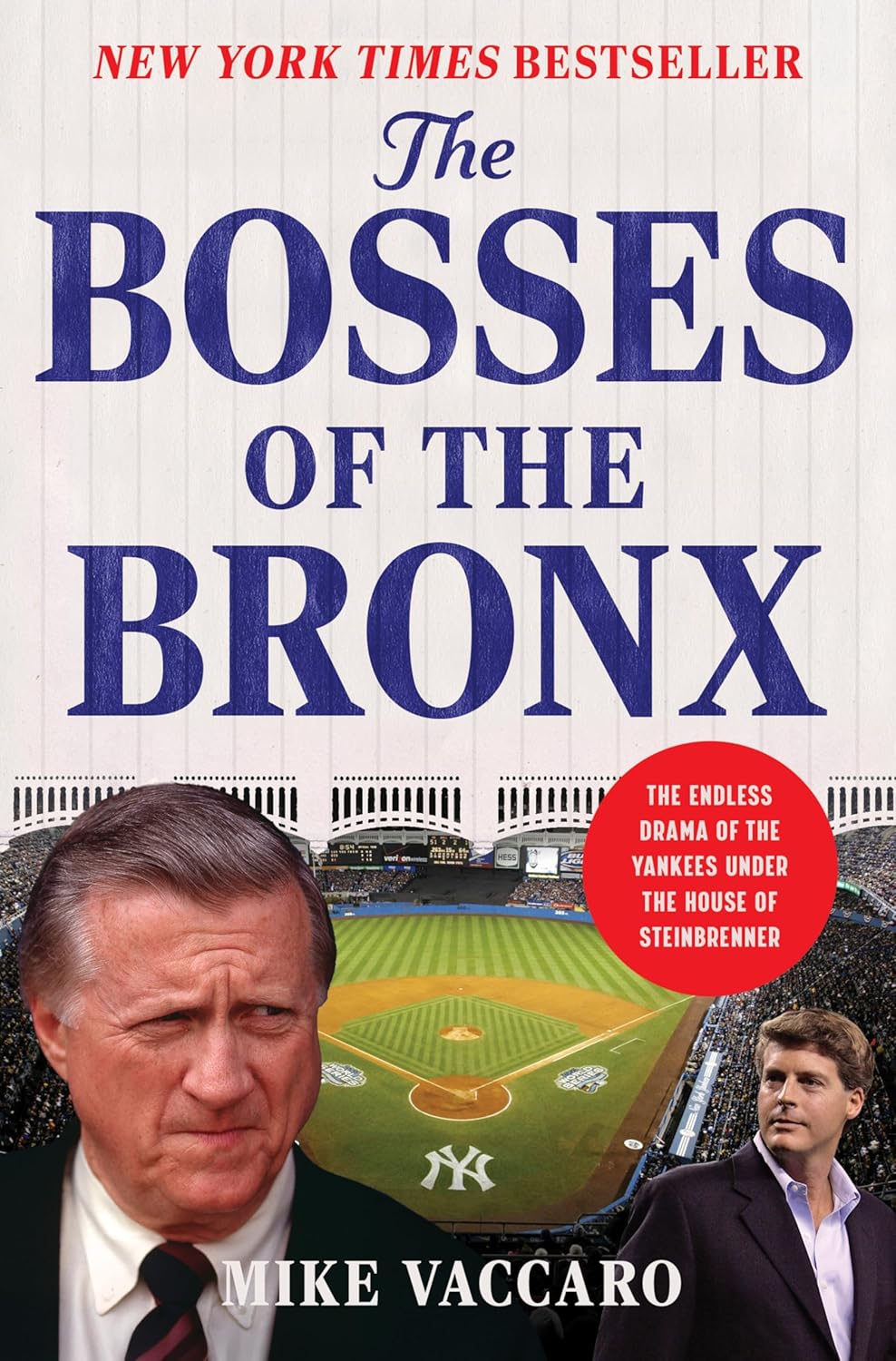 The one that lives up to its title the most is THE BOSSES OF THE BRONX: The Endless Drama of the Yankees Under the House of Steinbrenner by Mike Vaccaro, a veteran columnist for the New York Post. Drama and George Steinbrenner are practically synonymous. Any local fan --- Mets or Yankees --- will have an opinion on Steinbrenner, who led a group in buying the team in 1973 and ruled with an iron fist. Although he did have associates who went in on the deal with him, the saying went, “There's nothing so limited as being a limited partner of George Steinbrenner.”
But the Yankees did not begin with “The Boss” at the helm, so the book kicks off with the team’s origins. This part could have used some fleshing out, but Vaccaro, who has covered the team for decades, is anxious to get to the heart of the matter.
A former assistant football coach at Purdue and Northwestern, Steinbrenner was a strict disciplinarian and totally unafraid to call out underperforming personnel, even superstars like Reggie Jackson and Dave Winfield, on whom he lavished what were considered huge contracts at the time. He had high expectations and was always concerned about a “return on investment.” He also demanded that his teams adhere to strict dress codes and appearances. No doubt he lost a few potential free agents because they wouldn’t shave their beards or cut their long hair.
Not content with just owning the fabled franchise, Steinbrenner micromanaged to the extent that the field managers and general managers who should have been entrusted to make decisions became emotionally and physically ill.
Yankees fans will be familiar with many of the stories within: the constant battles with players, front-office staff and managers. There were more than 20 managerial changes during Steinbrenner’s reign, including many who were fired and later rehired. Billy Martin tops that list.
And since the Yankees had to share the back pages of New York tabloids with the Mets, there was always an ongoing struggle for media supremacy. Nothing irked Steinbrenner more than having the Mets usurp what he believed should have been his domain.
Steinbrenner’s battles weren’t confined only within the Yankees family. He was banned from the game twice for illegal activities that the various baseball commissioners deemed counter to “the best interests of the game.” But he always seemed to bounce back.
As much of a bully as he could be, there also was a tender side to Steinbrenner. There are a few stories about his philanthropy and emotional distress when hearing about the deaths of Martin and catcher Thurman Munson.
Towards the end, as Steinbrenner succumbed to age and the infirmities that come with it, he handed the reigns of the team to his sons, Hank and Hal, who were just as eager for the Yankees to be winners, but without the bluster and bravado of their dad. Just as any strict father figure, he loved his players but wasn’t reticent about showing them who was “the boss.”
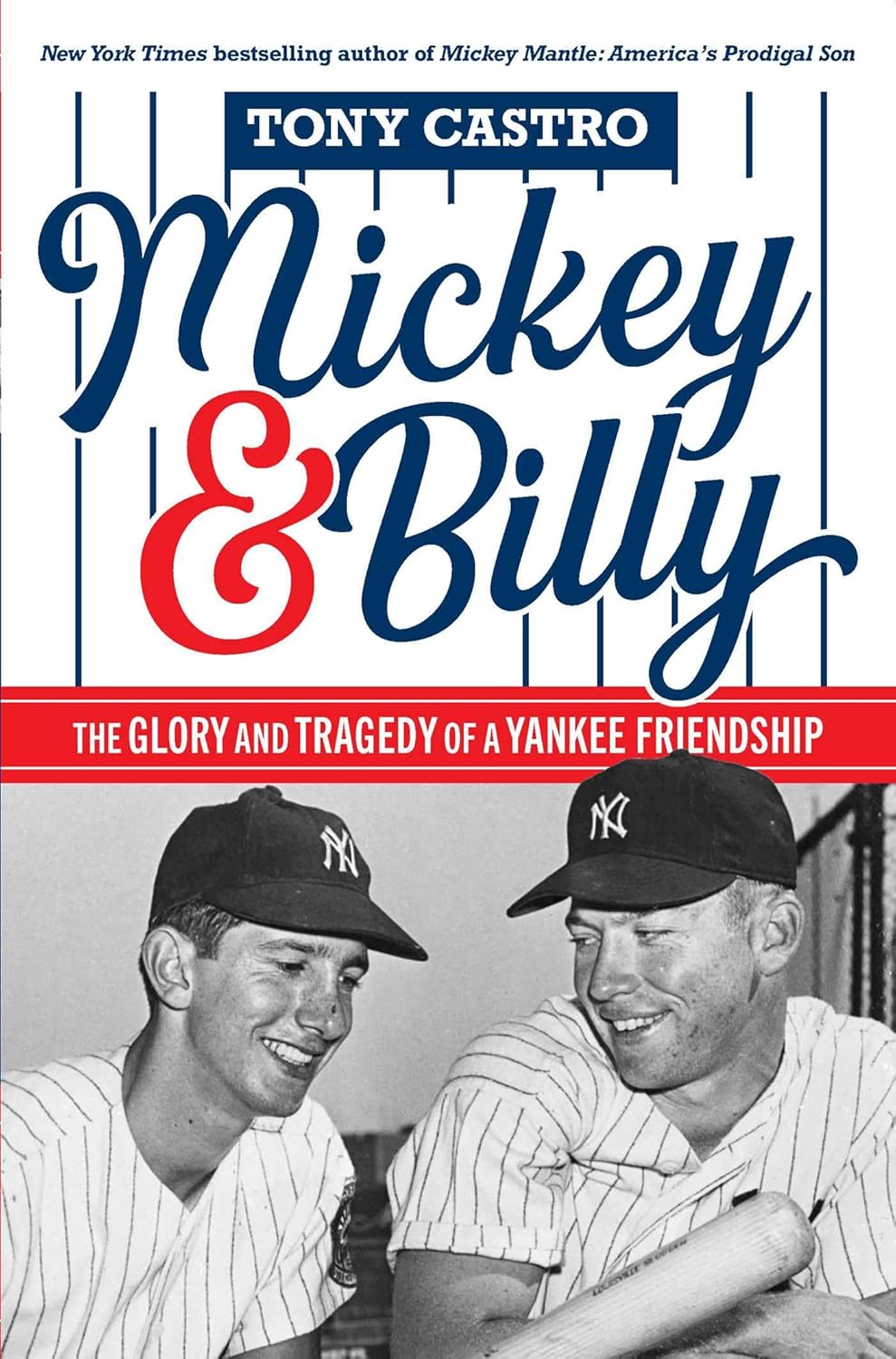 Billy Martin was always a problem child for the Yankees, as is evidenced in Tony Castro’s MICKEY & BILLY: The Glory and Tragedy of a Yankee Friendship.
Mickey Mantle was destined to be a star. Blessed with an Adonis-like physique and unparalleled athletic talent, how could he not join the likes of such Yankees legends as Babe Ruth, Lou Gehrig and Joe DiMaggio? Martin, on the other hand, was a skinny scrappy kid from a poor working-class neighborhood in Berkley. But both were favorites --- exasperating at times --- of manager Casey Stengel during the team’s dynasty spanning the early to mid-1950s where they became fast friends. Talk about opposites attracting.
Castro bounces back and forth between the two. Mantle is depicted as a shy kid from Oklahoma who was at first overwhelmed by the glamour and attention of the big city. Martin was the streetwise punk, always looking for an edge. I lost count of the number of times Castro used the word “scrappy” to describe him.
The Yankees front office was leery of Martin. They were concerned that he would be a bad influence on Mantle, three years his junior. And they were right to worry. Mantle took advantage of his rising stardom, living the high life with his buddy. They were finally separated after an infamous incident at the Copacabana night club in May 1957 where several members of the team, out for a birthday celebration, got into an altercation. That was the last straw. Martin was traded away a few weeks later.
But they remained brothers. Both battled demons, primarily in the form of alcoholism, until their deaths before they each turned 65.
MICKEY & BILLY is yet another book focusing on Castro’s favorite player, including the relationships between Mantle and his teammates: the oddly titled DiMAG & MICK: Sibling Rivals, Yankee Blood Brothers and MARIS & MANTLE: Two Yankees, Baseball Immortality, and the Age of Camelot. (Joseph Durso, an editor and sportswriter for The New York Times, collaborated with Ford and Mantle on WHITEY AND MICKEY: An Autobiography of the Yankee Years in 1977.)
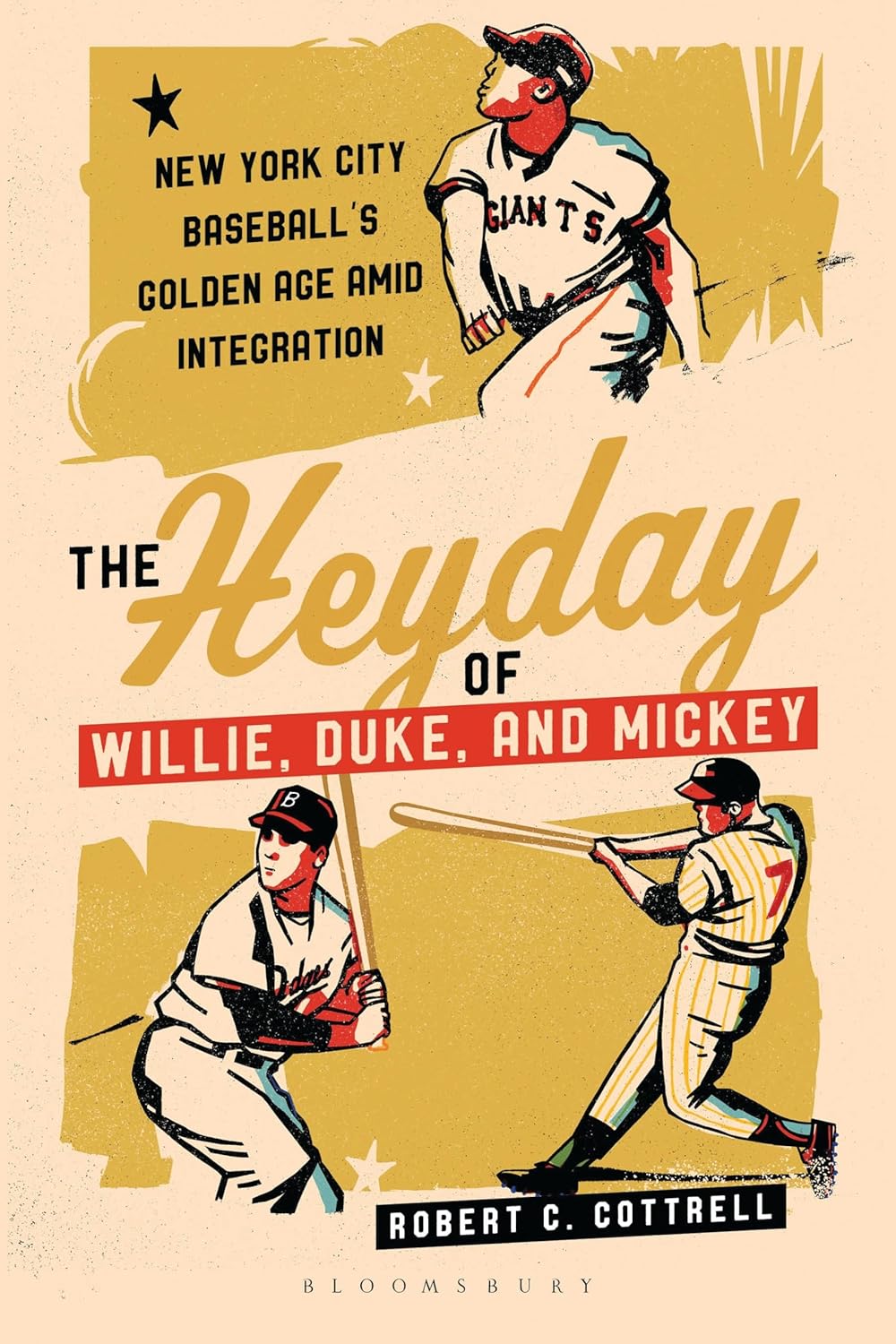 Of course, Mantle and the Yankees weren’t the only game in town in the 1950s. THE HEYDAY OF WILLIE, DUKE, AND MICKEY: New York City Baseball's Golden Age Amid Integration takes a broader look to include the Brooklyn Dodgers and New York Giants in the years before they abandoned the region to move to the West Coast.
Robert C. Cottrell --- whose previous baseball books include THE YEAR WITHOUT A WORLD SERIES: Major League Baseball and the Road to the 1994 Players' Strike and TWO PIONEERS: How Hank Greenberg and Jackie Robinson Transformed Baseball — and America --- falls a bit short when trying to fit in the integration part. Yes, he does note several shameful episodes of racism faced by African-American players after Jackie Robinson broke the color barrier. But they are shoehorned among recaps of “The Era,” when the three teams were top of the heap and frequently faced each other in the World Series.
The usual order when referring to the three center fielders has been Willie Mays, Mickey Mantle and Duke Snider. Terry Cashman released his famous anthem, “Willie, Mickey and the Duke”, in 1981. I wonder if that’s the reason why the title of Cottrell’s book is slightly out of the traditional order.
Then there’s the Mets, who almost seem to be an afterthought.
It’s always a thoughtful proposition when combining two disparate subjects --- in this case, baseball and politics. The powerful Yankees were looked upon as cold corporate types, favored by the upper class. The fledgling Mets, at least at first, were the team of the younger generation: beatniks, hippies and anti-establishment types.
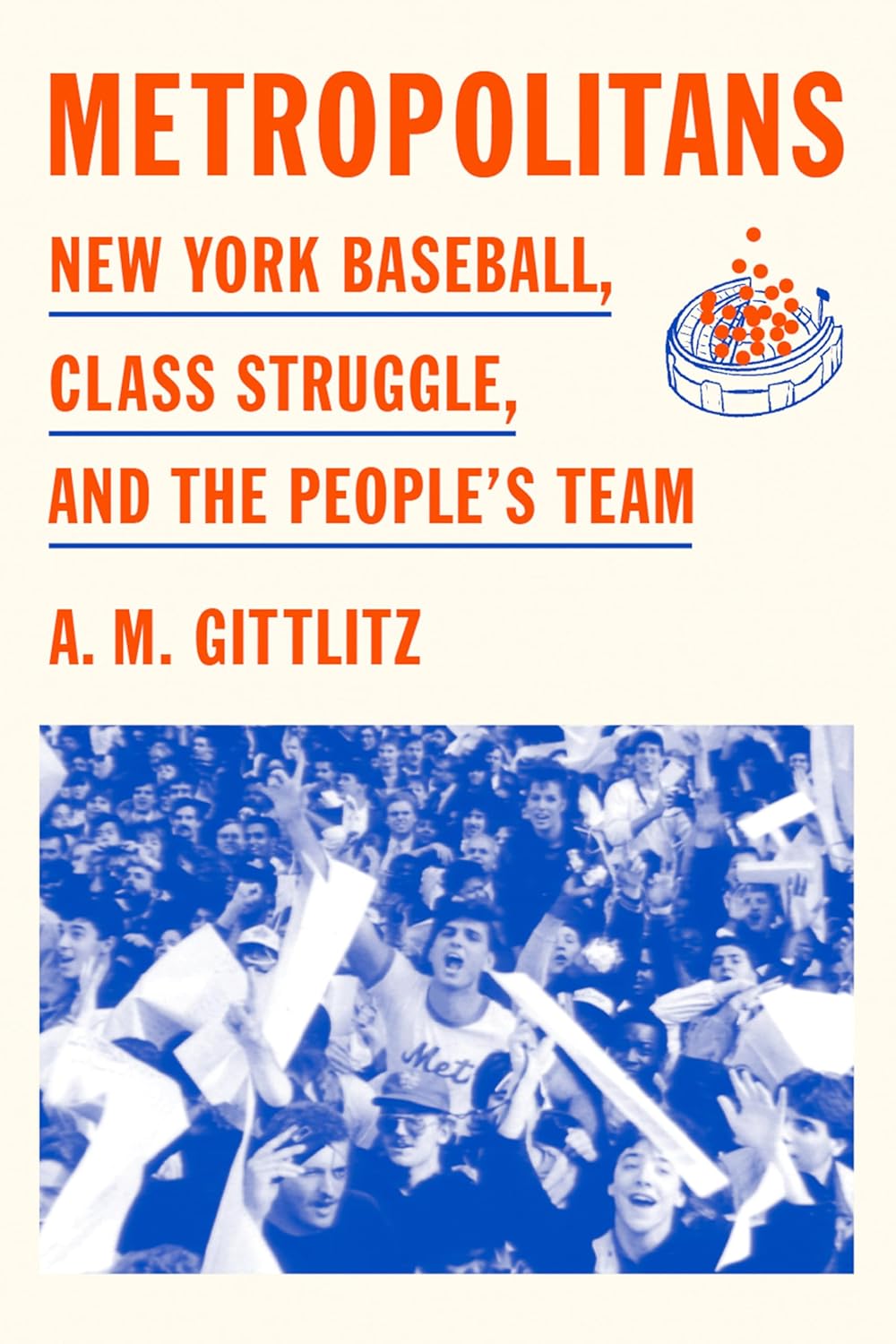 A.M. Gittlitz, a self-described “organizer and writer,” takes on a difficult task in METROPOLITANS: New York Baseball, Class Struggle, and the People's Team. What’s the appropriate proportion of sports to politics? Goodness knows there have been plenty of books about the Amazins’, some of which describe the machinations to get a team to replace the Dodgers and Giants, who had moved to California in an extreme example of white flight.
Gittlitz talks about the various stages in the history of the Mets: the “lovable losers” of the early years; the move towards a championship team in 1969; the ups and downs that followed over the decades. At each point, he discusses what was going on in local and U.S. politics, such as the Vietnam Era when Tom Seaver and others took an anti-war stand at a time when athletes were expected to just play ball and keep their opinions to themselves.
Gittlitz juxtaposes the fates of the team with different eras: the me-first 1980s when greed was good, the nation coming together after 9/11, etc. People being people, you have the intra-club conflicts between liberals and conservatives, as well as racial issues.
METROPOLITANS goes way back; the first club with that appellation was created in 1883. Jump ahead to the early 1960s when New York and Houston were added to the National League as part of a deal with the never-realized Continental Baseball League.
As fascinating as this overall story is, there are a number of errors in the baseball narrative. For example, at one point, it is stated that the 1985 team’s 98 wins was their best season ever. But they had won 100 in 1969 and would surpass that total in 1986 with 108 victories.
Still, Gittlitz gets props for even diving into such an unusual thematic combination.
--- Reviewed by Ron Kaplan (RonKaplansBaseballBookshelf.com)

