Barbara Bamberger Scott

Biography

Barbara Bamberger Scott


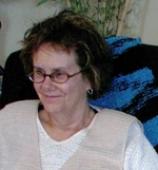
Barbara Bamberger Scott grew up in North Carolina and now makes her home in the semi-fictional town of Mayberry. She has traveled the world, living and working in Botswana, Kenya, the Dominican Republic, England, Sweden, Spain and India.

Back in the US apparently forever, she continues to roam whenever possible, taking long road trips with her husband, Donnie "Dobro" Scott, with whom she co-authored TWO LANE TRAVELING. She has written two books concerning the work of spiritual master Meher Baba. Her most recent book is GENEROUS FRUITS, a survey of American homesteading.
 
She is now retired after years of working in human services --- teaching small-scale gardening overseas, counseling adults with developmental disabilities, serving as a Spanish interpreter in various medical projects, and, most recently, assisting job seekers in rural Carolina counties.

Music, from folk to country to bluegrass, is a passion she shares with family and friends.

Barbara Bamberger Scott
Reviews by Barbara Bamberger Scott

by Kerry Kennedy - Biography, Nonfiction

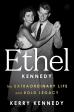
When her husband, Robert F. Kennedy, was killed in 1968, Ethel Skakel Kennedy --- then pregnant with their 11th child --- drew national attention for her grace, dignity and resolute commitment to furthering his work in human rights, even in her grief. But as her daughter, Kerry, witnessed, Ethel was so much more than a dutiful wife and keeper of Robert's legacy of service. She was courageous, curious, compassionate, boisterous and witty, always guided by faith and an instinct for speaking truth to power. In ETHEL KENNEDY, Kerry delves into her own memories, her family's recollections, and her mother's private papers.

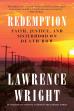
by Lawrence Wright - Biography, Nonfiction

In the fall of 2014, Deacon Ronnie Lastovica visited a women’s prison in Gatesville, Texas, and gave communion to the women on death row. Moved by the meeting, the Deacon vowed to return weekly, but he knew he couldn’t help these women alone. He called upon the Sisters of Mary Morning Star, a group of contemplative nuns in Waco, Texas, to visit the seven condemned women with him. What follows is an incredible story of a spiritual alliance between two groups of women who, though they couldn't seem more different, are living uniquely similar lives. Lawrence Wright takes us into the death row unit, laying bare their stories.

by Charles Spencer - Memoir, Nonfiction

In September 1997, Charles Spencer stood in Westminster Abbey before a watching world and shared his grief at losing his beloved sister, Diana. Now, nearly 30 years later, he tells the astonishing story of his life with Diana and the tragic week of her death. In childhood, Charles and Diana, the youngest Spencers, were inseparable. Yet everything changed when Diana married the Prince of Wales, now King Charles III, and overnight became a global icon. Charles saw his older sister serve the world’s marginalized and relish being mother to her treasured sons. But, pursued by a barbaric press as her royal marriage crumbled, she was left desperately alone. Charles always tried to be there for Diana --- until that black night in August 1997.

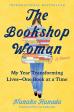
written by Nanako Hanada, translated by Cat Anderson - Memoir, Nonfiction

Nanako Hanada is a passionate book lover who manages the Village Vanguard, an iconically eccentric bookstore in Tokyo. But her story takes a turn with the breakdown of her marriage. Spending her nights alone in Tokyo's four-hour capsules, she’s finding herself rather isolated. That's until Nanako finds the meet-up site Perfect Strangers, where people meet for 30-minute bursts to find friendship or romance, build a network, or just share ideas. She sets up her profile promising to recommend people “the book that will change their life.” In the ensuing year, Nanako meets hundreds of people, a ragtag range of strangers who happen to believe in the power of a great book.

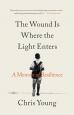
by Chris Young - Memoir, Nonfiction

If our world were more just, Chris Young would have been crossing a stage at college graduation at the age of 22. Instead, he was marched into a maximum-security federal prison, facing life under mandatory drug sentencing laws. Like far too many young Black men from his neighborhood in Clarksville, Tennessee, this was where his story was supposed to end. But one day in the prison library, a book caught his eye: an encyclopedia. As he began to turn the pages, Chris felt himself transported. He began to confront the nihilism around him, the trauma of his past, and the cruelty of a system determined to confine him. At his sentencing hearing, Chris gave such a moving speech that the judge resigned from his lifetime appointment to the bench and fought to free him.

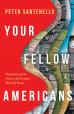
by Peter Santenello - Memoir, Nonfiction, Travel

Have you ever swapped stories on a porch with Amish snowbirds in Florida? Searched for reindeer with the Siberian Yupik in Alaska? Been a guest on a houseboat deep in the Louisiana bayou? Peter Santenello hadn’t either until, after years spent traveling through 85 countries and living abroad, he realized the most unfamiliar territory was often his own American backyard. And so, with a camera in hand and an open mind, he began visiting communities across the country, places that most of the media overlooks or misrepresents, from tiny towns in Appalachia to the streets of East LA. What began as curiosity became --- one story at a time --- an intimate, revealing portrait of America today.

by Eric Jay Dolin - History, Nonfiction

From the bestselling author of BLACK FLAGS, BLUE WATERS comes the story of the American whaleship Mentor, wrecked in 1832 on a remote reef in the western Pacific. With supplies dwindling, the 11 surviving crewmen face not only the miseries of shipwreck in unfamiliar territory but also the profound uncertainty of contact with the Indigenous people of the Micronesian archipelago of Palau, who within days approach the deserted men brandishing axes, clubs and spears. In this gripping saga of cultural collision, tribal wars and dashed hopes, award–winning historian Eric Jay Dolin vividly reconstructs the Mentor’s doomed voyage, the years of perilous captivity, and the delicate negotiations and fraught naval rescue mission that followed.

by Kip Lornell and Tom Mindte - Biography, Music, Nonfiction

Buzz Busby’s move to Washington, DC, in 1951 helped launch bluegrass in the nation’s capital while the intensity of his mandolin playing drew raves for its unrelenting pace and innovative style. Kip Lornell and Tom Mindte draw on interviews and some 50 hours of Busby speaking about his life to tell the story of a largely forgotten bluegrass virtuoso. Busby and his band, the Bayou Boys, stood front and center on a mid-1950s DC-area TV show that, though short-lived, catalyzed the formation of the city’s bluegrass community. Time with the Louisiana Hayride and classic, if little-heard, bluegrass sides like “Lonesome Wind” seemed to promise a bright future. But a devastating car wreck and a host of legal and personal troubles triggered a long decline into drug and alcohol abuse that undermined Busby’s career.

by Sarah Valentine - History, Nonfiction

Facing the global threat of a rising Communist world power in the aftermath of World War II, the U.S. employed hundreds of Black Americans to speed read Russian communications and gather essential information on their most dangerous nuclear rival. The result was the creation of a segregated civilian codebreaking unit known as the Traffic Processing Division --- The Plantation. Its 100 college-educated Black women made invaluable breakthroughs in the country’s Soviet intelligence, even as the Red Scare and the backlash against civil rights eroded their democratic freedoms at home. Their underappreciated top-secret work led directly to victory over the USSR and the end of the Cold War 30 years later. In DECODING THE DEVIL, Sarah Valentine tells their remarkable story in full for the first time. 

by Reyna Grande - Essays, Memoir, Nonfiction

Reyna Grande interrogates how living between two nations, two languages and two identities has shaped the woman, mother and writer she has become. Moving from the legacy of violence in her hometown of Iguala, Mexico, to a bittersweet family vacation in Europe spent reconciling her own impoverished past with her children’s world of abundance, she uncovers startling truths about the nature of survival. Whether being racially profiled in the Arizona borderlands or finding unexpected wisdom from the slugs in her garden, Grande unflinchingly asks: How do we bridge the gap between who we were and who we have become? How do we turn pain into power? When memory threatens to define us, how can we use story to heal while still honoring our boundaries?