

Adult

written by Mary Higgins Clark and Alafair Burke, read by Jan Maxwell - Fiction, Mystery, Suspense, Thriller

Casey Carter was convicted of murdering her fiancé, famed philanthropist Hunter Raleigh III, 15 years ago. And Casey claims she’s innocent. Although she was charged and served out her sentence in prison, she is still living “under suspicion.” Her story attracts the attention of Laurie Moran and the “Under Suspicion” news team. It’s Casey’s last chance to finally clear her name, and Laurie pledges to exonerate her. With Alex Buckley taking a break from the show, “Under Suspicion” introduces a new on-air host named Ryan Nichols, who has no problems with steering --- and stealing --- the show, and even tries to stop Laurie from taking on Casey’s case because he’s so certain she’s guilty.

written by Alice Hoffman, read by Amber Tamblyn - Fiction

Shelby Richmond is an ordinary girl until one night an extraordinary tragedy changes her fate. Her best friend’s future is destroyed in an accident, while Shelby walks away with the burden of guilt. What happens when a life is turned inside out? When love is something so distant it may as well be a star in the sky? A fan of Chinese food, dogs, bookstores, and men she should stay away from, Shelby has to fight her way back to her own future. In New York City she finds a circle of lost and found souls --- including an angel who’s been watching over her ever since that fateful icy night.

edited by Brian F. Codding and Karen L. Kramer - Economics, Nonfiction

Foraging persists as a viable economic strategy both in remote regions and within the bounds of developed nation-states. Given the economic alternatives available, why do some groups choose to maintain their hunting and gathering lifeways? Through a series of detailed case studies, the contributors to this volume examine the decisions made by modern-day foragers to sustain a predominantly hunting and gathering way of life. What becomes clear is that hunter-gatherers continue to forage because the economic benefits of doing so are high relative to the local alternatives and, perhaps more importantly, because the social costs of not foraging are prohibitive.

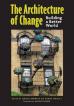
edited by Jerilou Hammett and Maggie Wrigley - Architecture, Nonfiction

THE ARCHITECTURE OF CHANGE is a collection of articles that demonstrates the power of the human spirit to transform the environments in which we live. This inspiring book profiles people who refused to accept that things couldn’t change, who saw the possibility of making something better and didn’t hesitate to act. It explores communal architecture produced not by specialists but by people, drawing on their common lives and experiences, who have a unique insight into their particular needs and environments. Running through their stories is a constant theme of social justice as an underlying principle of the built environment.

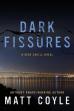
by Matt Coyle - Fiction, Suspense, Thriller

La Jolla Chief of Police Tony Moretti is convinced that Private Investigator Rick Cahill killed a missing person. With Moretti on his tail and the bank about to foreclose on his house, Rick takes a paying case that will stave off the bank, but pits him against Moretti and the La Jolla Police Department. Brianne Colton, a beautiful country singer, believes that her estranged husband’s suicide was really murder. Each new piece of evidence convinces Rick that she’s right. He breaks his number one rule and falls for Brianne, even as he begins to question her motives. As Moretti cinches the vise tighter, evil forces emerge from the shadows who will do anything to stop Rick from uncovering the truth.

by Bob Drury and Tom Clavin - History, Nonfiction

From the authors of the New York Times bestselling THE HEART OF EVERYTHING THAT IS and HALSEY'S TYPHOON comes the dramatic, untold story of a daredevil bomber pilot and his misfit crew who fly their lone B-17 into the teeth of the Japanese Empire in 1943, engage in the longest dogfight in history, and change the momentum of the War in the Pacific --- but not without making the ultimate sacrifice.

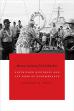
by Geoffrey M. White - History, Nonfiction

Analyzing moments in which history is re-presented --- in commemorative events, documentary films, museum design and educational programming --- Geoffrey M. White shows that the memorial to the Pearl Harbor bombing is not a fixed or singular institution. Rather, it has become a site in which many histories are performed, validated and challenged. In addition to valorizing military service and sacrifice, the memorial has become a place where Japanese veterans have come to seek recognition and reconciliation, where Japanese Americans have sought to correct narratives of racial mistrust, and where Native Hawaiians have challenged their ongoing erasure from their own land.

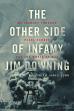
by Jim Downing with James Lund - History, Memoir, Nonfiction

The natural human impulse is to run from attack. Jim Downing --- along with countless other soldiers and sailors at Pearl Harbor on December 7, 1941 --- ran toward it, fighting to rescue his fellow navy men, to protect loved ones and civilians on the island, and to find the redemptive path forward from a devastating war. We are protected from war these days, but there was a time when war was very present in our lives. In THE OTHER SIDE OF INFAMY, we learn from a veteran of Pearl Harbor and World War II what it means to follow Jesus into and through every danger, toil and snare.

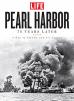
by Editors of LIFE Magazine - History, Nonfiction, Photography

On December 7, 1941, the Japanese Empire stunned the world with a surprise attack on the U.S. naval base at Pearl Harbor. Commemorating this momentous historical event that brought the United States into World War II, LIFE revisits the infamous scene in beautifully illustrated photographs: the years leading up to 1941, Lindbergh's antiwar rallies, the desperate scene in Europe and at Winston Churchill's 10 Downing Street, and the Japanese admiral who realized he awoke a sleeping giant. Highlights include "The Call to Action," LIFE's actual pages in the 10 weeks after the attack, as America mobilized and went to war, and a concluding chapter that covers today's modern tensions in the waters of the Far East.

by Anthony Summers and Robbyn Swan - History, Nonfiction

In the aftermath of the Japanese onslaught on Pearl Harbor, Admiral Husband Kimmel, Commander-in-Chief of the Pacific Fleet, was relieved of command, accused of negligence and dereliction of duty. But the Admiral defended his actions through eight investigations and for the rest of his long life. Following the Admiral’s death, his sons fought on to clear his name. Now that they in turn are dead, Kimmel’s grandsons continue the struggle. With unprecedented access to documents, diaries and letters, and the family’s cooperation, Summers’ and Swan’s search for the truth has taken them far beyond the Kimmel story --- to explore claims of duplicity and betrayal in high places in Washington.

